Actions must speak louder than
unsigned contract, says Virginia Federal Court.
The failure to obtain a fully signed agreement is not always fatal to a
breach of contract claim. However, a recent Virginia federal court case reminds us of the need to ensure
signed written agreements are in place as early as possible in a business relationship. At the same time, businesses should be aware that their conduct may demonstrate that they have waived the need to execute a
written contract.
Musical artist Cameron Jibril Thomaz, who performs under the name "Wiz Khalifa" (“Mr. Thomaz”), sued concert promoter It’s My Party, Inc. (“IMP”) for
breach of a contract that was never signed. Mr. Thomaz engaged The Agency Group to serve as his booking agent for a new tour which would have included a concert at The Patriot Center at George Mason University (“GMU”). The Agency Group then asked IMP to promote the concert, and represented to IMP that Mr. Thomaz would be releasing a new album soon. The Agency Group emailed a contract to IMP and requested that IMP sign and return it to The Agency Group for Mr. Thomaz’s approval and signature, which IMP never did. The
contract stated that it would not be binding unless signed by all parties.
 |
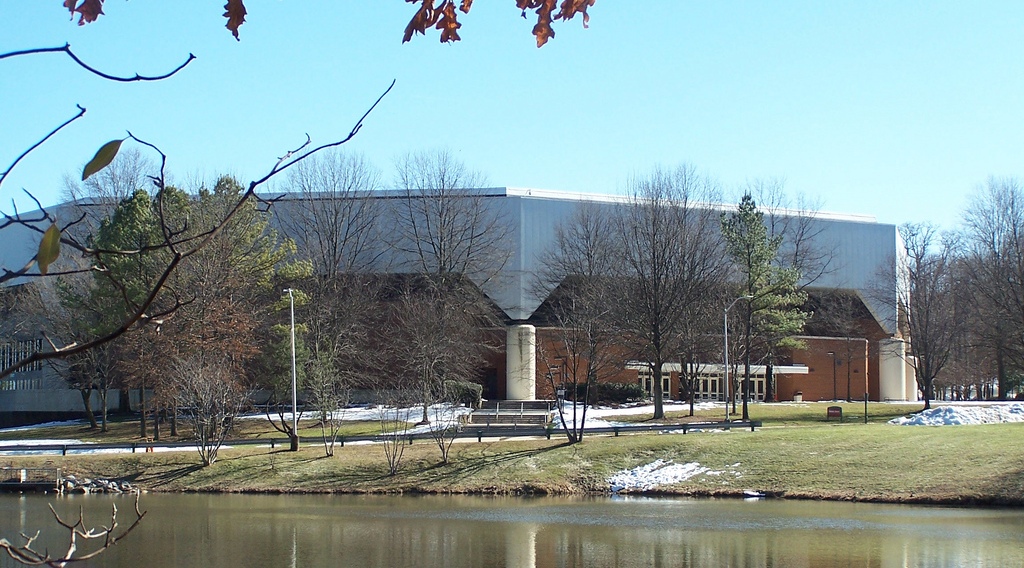
| George Mason University Patriot Center |
Mr. Thomaz argued that the parties entered into a contract for him to perform at GMU and that he turned down an opportunity to perform at a different venue in reliance on IMP’s representations. Moreover, he argued that despite the fact that IMP partially performed the contract by advertising the concert, and that he partially performed by preparing for the concert, IMP refused to pay him and canceled the concert after fans already had purchased tickets. On the other hand, IMP asserted that its interest in promoting Mr. Thomaz’s concert was dependent upon the release of his new album because it did not believe he could otherwise attract a sufficient number of fans to warrant his appearance at the venue. The parties had agreed to sell concert tickets before
finalizing the agreement, but as IMP had predicted, advance tickets had sold poorly in the absence of the album release. While IMP agreed to reschedule the concert, the parties were unable to come to
mutually agreeable terms and IMP ultimately canceled the concert and withdrew its offer to promote it.
Under Virginia law, a contract can exist despite the absence of a signature if the parties' actions evidence an intention to enter into an agreement. However, if the parties intended to sign a formal agreement but did not, this creates a presumption that no contract exists, which can only be overcome with strong evidence. Since the terms of the alleged contract were unambiguous in that the parties did not intend the agreement to be binding unless signed by all parties, the court presumed that no contract existed. As such, Mr. Thomaz was required to demonstrate strong evidence that the actions of the parties showed otherwise.
However, the court dismissed the complaint after Mr. Thomaz presented little evidence of the parties'
conduct during negotiations and almost wholly relied on the
unsigned contract itself. The fact that tickets were sold was not enough to prove that IMP intended to enter into a contract given the countervailing evidence, including IMP’s failure to pay the deposit required by the contract and Mr. Thomaz’s failure to contemporaneously object. Finally, the court noted that the contact had an
arbitration clause requiring the parties to submit any dispute to arbitration and that if Mr. Thomaz considered the contract to be binding, he would have submitted the matter to arbitration.
Sara Dajani is an associate attorney at the Washington, DC business law firm, Berenzweig Leonard, LLP. She can be reached at sdajani@berenzweiglaw.com.